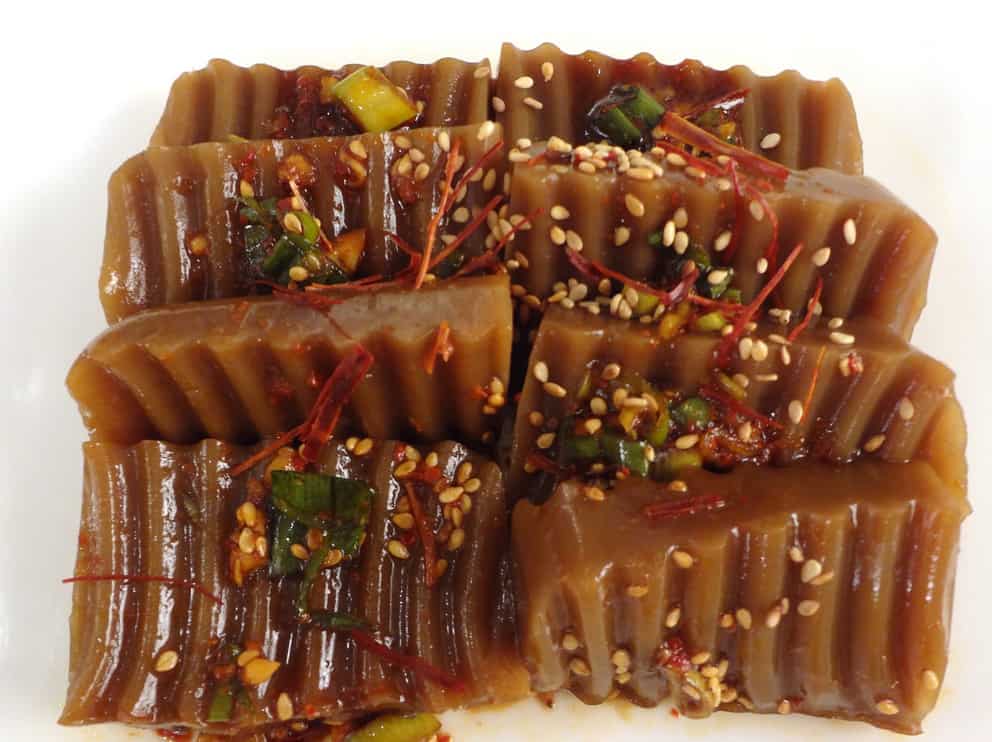
Exploring Acorn Jelly: A Nutritious Korean Delicacy
Acorn jelly, also known as dotorimuk or tteok in Korean cuisine, is a traditional dish that has been enjoyed for centuries. Made from acorn starch, this unique jelly holds a special place in Korean culinary heritage and is celebrated for its health benefits and versatility.
What is Acorn Jelly?
Acorn jelly is a jelly-like substance derived from the starch of acorns, the nuts of oak trees. The process of making acorn jelly involves soaking and grinding acorn powder, then filtering and boiling it until it solidifies into a gelatinous texture.
Health Benefits of Acorn Jelly
Rich in nutrients such as vitamins, minerals, and antioxidants, acorn jelly offers a range of health benefits. It is low in calories and fat, making it a healthy choice for those watching their weight. Additionally, acorn jelly is gluten-free and a good source of fiber, promoting digestive health.
- Rich in nutrients
- Low in calories
- Gluten-free
- Source of fiber
How Acorn Jelly is Served
In Korean cuisine, acorn jelly is commonly served as a cold savory dish called dotorimuk, which is seasoned with soy sauce, sesame oil, and other ingredients. It is often garnished with vegetables such as cucumbers and carrots, making for a refreshing and nutritious meal. Acorn jelly can also be added to soups, stews, and salads for a unique flavor and texture.
Acorn Jelly in Korean Culture
Acorn jelly holds cultural significance in Korea, where it is enjoyed as a symbol of longevity and health. It is a prominent feature in Korean temple cuisine, known for its emphasis on natural, plant-based ingredients. Acorn jelly is also a popular dish during the autumn season when acorns are harvested.
Experience the Delight of Acorn Jelly
Next time you are looking to try something new and delicious, consider exploring the world of acorn jelly. Its nutty flavor, gelatinous texture, and health benefits make it a delightful addition to any meal.











