Is Baking Soda and Baking Powder the Same?
Many novice and experienced bakers often confuse baking soda and baking powder due to their similar names and functions in baking. However, these two ingredients are not the same and understanding their differences is essential for successful baking outcomes.
What is Baking Soda?
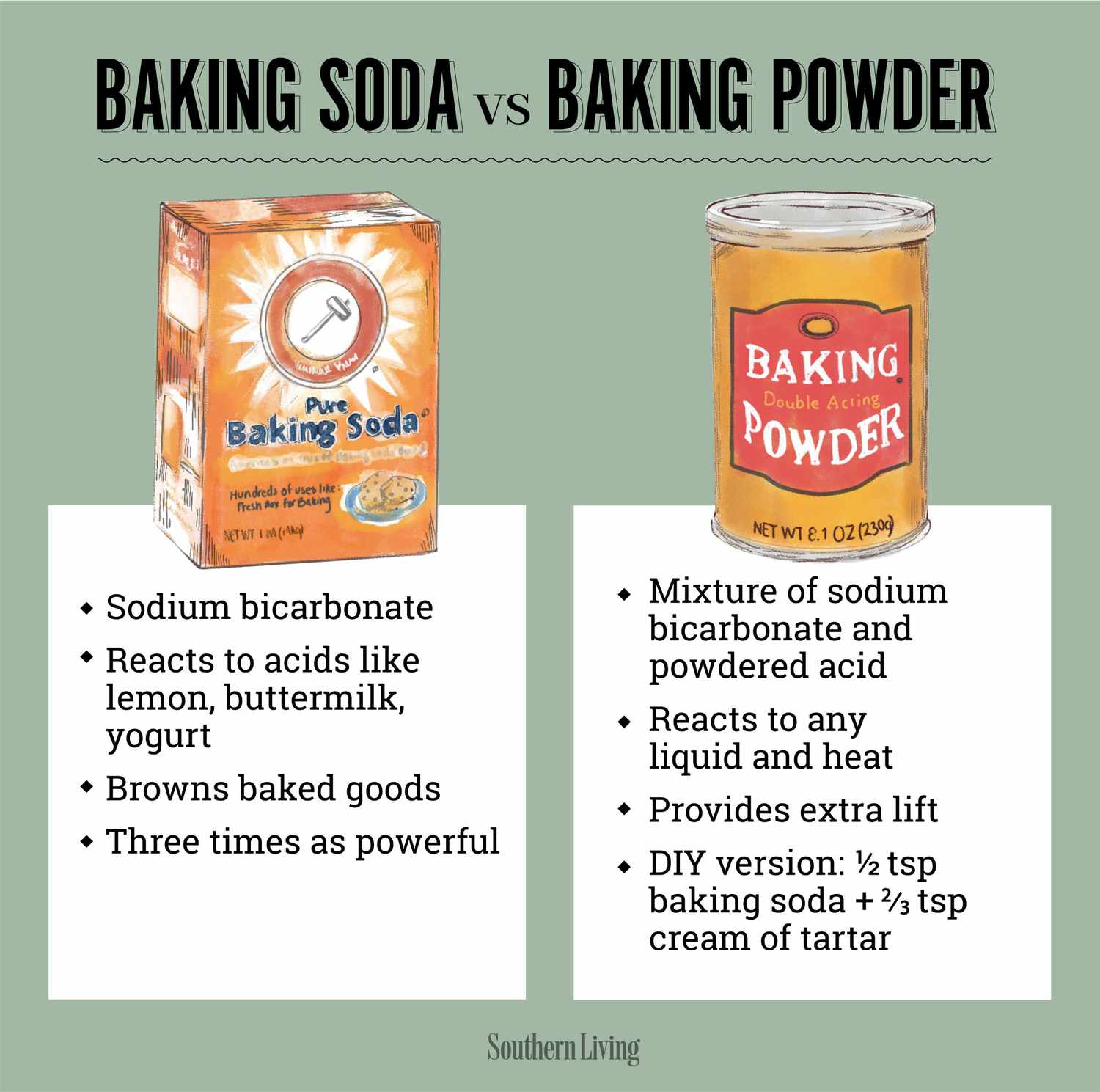
Baking soda, also known as sodium bicarbonate, is a leavening agent commonly used in baking. It requires an acidic ingredient like buttermilk, yogurt, vinegar, or lemon juice, to activate and produce carbon dioxide gas, which helps baked goods rise.
What is Baking Powder?
Baking powder is a mixture of baking soda, an acid (cream of tartar), and a moisture-absorbing agent (usually cornstarch). Unlike baking soda, baking powder is a complete leavening agent on its own and does not require an additional acidic ingredient to activate.
Key Differences Between Baking Soda and Baking Powder:
- Baking soda needs an acidic ingredient to activate, while baking powder is self-activating.
- Baking soda is pure sodium bicarbonate, while baking powder contains additional ingredients.
- Baking soda is more potent than baking powder, so the quantities used in recipes differ.
When to Use Each:
When a recipe includes an acidic ingredient, baking soda is the preferred leavening agent. In contrast, recipes without acidic components often call for baking powder. Using the correct leavening agent is crucial for achieving the desired texture and rise in baked goods.
Conclusion
While baking soda and baking powder may appear similar, their distinct compositions and activation processes make them unique in baking. Understanding when and how to use each ingredient is essential for successful baking results.
For more baking tips and tricks, visit LAR Real Las Vegas.











