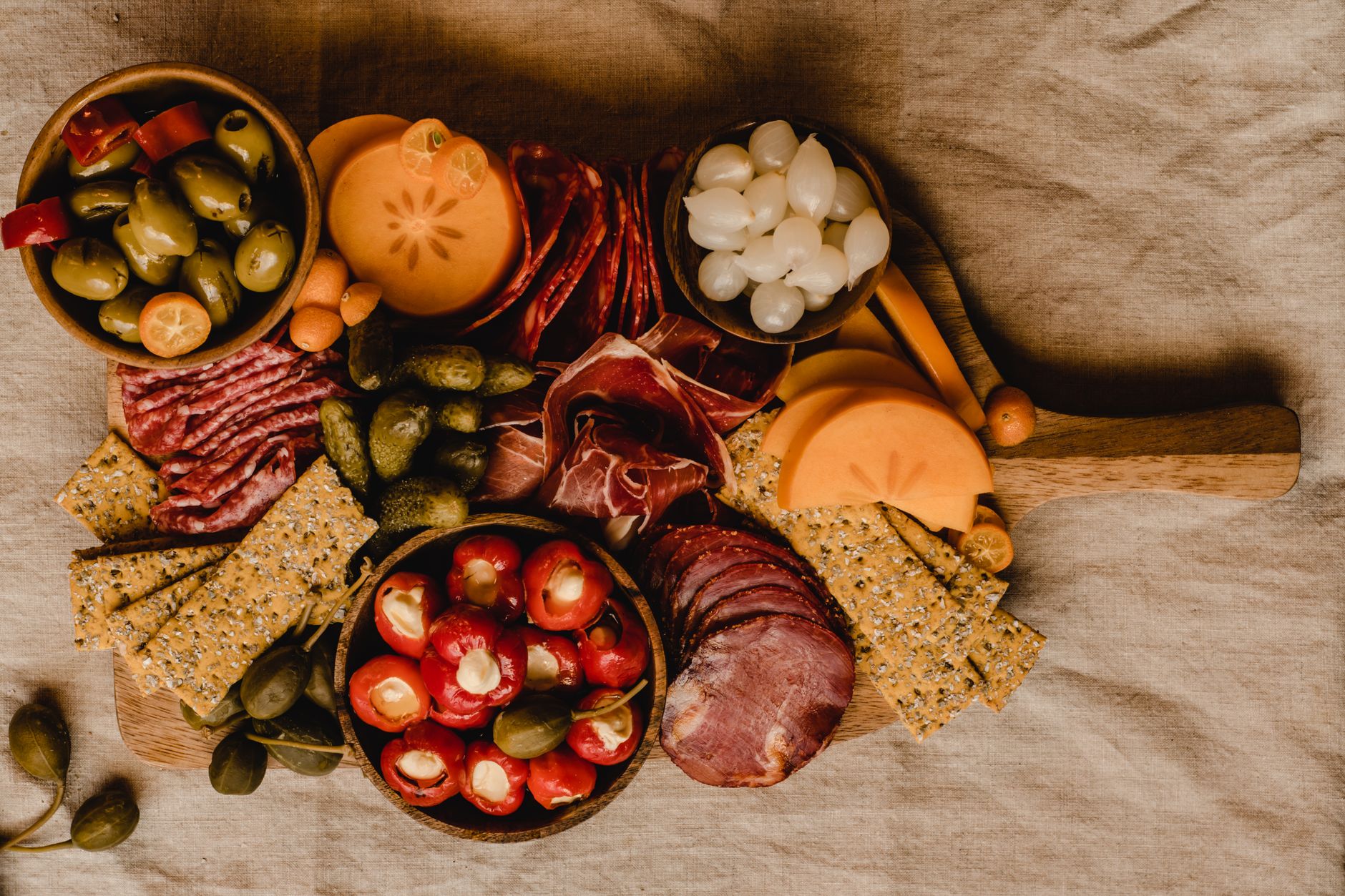
How to build a balanced charcuterie board with the perfect meat and cheese ratio?
Ever found yourself staring at an empty board, brimming with enthusiasm but unsure where to begin? Crafting an exquisite charcuterie board is more than just arranging deli items; it’s an art form that delights both the eye and the palate. The secret to a truly memorable spread lies in achieving a harmonious blend of flavors, textures, and visual appeal, all built upon a thoughtful charcuterie board meat cheese ratio.
The perfect meat to cheese ratio
The foundation of any exceptional charcuterie board is a well-considered balance, particularly regarding your charcuterie board proportions of meat and cheese. While there’s no single “rule of thumb” that dictates every scenario, a good starting point for a balanced charcuterie board ratio is roughly 1:1, or slightly favoring cheese. This means for every ounce of meat, you’ll have an ounce of cheese. This ratio allows each element to shine without overwhelming the other, creating a dynamic eating experience.
For instance, if you’re aiming for a board that serves as a light appetizer, you might aim for 1-1.5 ounces of meat and 1.5-2 ounces of cheese per person. If the board is intended to be a more substantial offering or even a main course, increase these amounts to 2-3 ounces of meat and 2-3 ounces of cheese per person. Remember, the goal is a balanced charcuterie board ratio that offers variety without excess.
Selecting complementary meats and cheeses
The magic of charcuterie unfolds in the thoughtful selection and pairing of its core components. To truly elevate your board, consider a range of textures and flavor profiles for both your meats and cheeses.
Here’s a guide to help you select complementary items:
-
Cured Meats (Salumi):
- Hard & Dry-Cured: Prosciutto, Jamón Serrano, Salami (Genoa, Soppressata, Finocchiona). These offer salty, often spicy, and rich flavors.
- Soft & Spreadable: Pâté, Rillettes. Offer a smoother, often richer texture and flavor.
- Cooked & Smoked: Smoked Ham, Mortadella, Coppa. These can add different aromatic dimensions.
-
Cheeses: Aim for 3-5 different types for variety.
- Hard & Aged: Parmesan, Aged Cheddar, Gouda, Manchego. These are firm, often nutty, and intensely flavorful. They pair beautifully with salty, dry-cured meats like prosciutto or spicy salami.
- Semi-Hard: Swiss, Fontina, Provolone. Milder, melt-in-your-mouth textures that are versatile. Excellent with coppa or a milder salami.
- Soft & Creamy: Brie, Camembert, Goat Cheese (Chevre), Boursin. Rich, buttery, and often tangy. They complement milder meats like mortadella or can be balanced by the saltiness of prosciutto.
- Blue: Gorgonzola, Roquefort, Stilton. Bold, pungent, and earthy. These stand up well to strong, spicy salami or can be softened by sweet accompaniments like figs or honey.
A well-rounded charcuterie board will feature at least one hard, one soft, and one semi-hard cheese, alongside 2-3 types of meat to ensure diverse flavor experiences.
Calculating quantities per guest
Accurately estimating quantities ensures your board is generous without being wasteful, regardless of whether you’re making a charcuterie board for an intimate gathering or a larger party.
Here’s a simple guide to calculating your charcuterie board proportions:
-
As a light appetizer (pre-dinner nibbles, 1-2 hours):
- Meat: 1-1.5 ounces per person
- Cheese: 1.5-2 ounces per person
- Example for 10 guests: 10-15 ounces of meat, 15-20 ounces of cheese.
-
As a hearty appetizer or main course (longer gathering, 2+ hours):
- Meat: 2-3 ounces per person
- Cheese: 2-3 ounces per person
- Example for 10 guests: 20-30 ounces of meat, 20-30 ounces of cheese.
Remember to account for other accompaniments like crackers, fruit, nuts, and olives, which will also contribute to the overall fullness of your board. When deciding how to make charcuterie board for varying guest counts, scale these guidelines accordingly. For a party of 20, simply double the amounts calculated for 10 guests.
- Pro Tip: Always slightly over-estimate rather than under-estimate. It’s better to have a little left over than to run out. Leftovers can often be repurposed for sandwiches or snacks the next day.
Arrangement and visual balance techniques
Creating a visually stunning charcuterie board is key to its appeal. The arrangement is where your artistic flair comes into play.
- Anchor the Board: Start by placing your larger, less-flexible items first. This usually means your cheeses and any small bowls for dips or olives. Spread these out to create natural anchor points.
-
Meat Placement: Arrange meats in appealing ways.
- Fanned: For thinly sliced meats like prosciutto, fan them out elegantly.
- Folded: For rounder slices of salami or coppa, fold them into quarters or halves to add height and texture.
- Rolled: Delicate slices can be rolled into loose cigars.
Place different meats near cheeses that complement them, but don’t feel obligated to keep them strictly separate. Intermingling creates abundance.
- Fill in with Accompaniments: Once the main meats and cheeses are down, use crackers, fruits, nuts, and spreads to fill in the gaps. This creates a lush, abundant look. Cluster items together rather than scattering them randomly.
- Vary Heights and Textures: Elevate some items (like a small stack of crackers) or fold meats to create peaks. Use a variety of textures – crunchy crackers, soft cheese, smooth dips, crinkly meat.
- Color Contrast: Think about the color palette. Bright berries against pale cheese, dark olives next to light crackers. This makes the board pop.
- Balance the “Weight”: Distribute items evenly across the board so one side doesn’t look too heavy or sparse. Aim for a sense of overall harmony.
- Pro Tip: Allow cheeses to sit at room temperature for about 30-60 minutes before serving. This brings out their full flavor and aroma, enhancing the tasting experience.
- Pro Tip: Don’t be afraid to mix and match! Part of the fun of a charcuterie board is discovering new flavor combinations.
Accompaniments and flavor balance
Accompaniments are the unsung heroes of a charcuterie board, rounding out the experience and enhancing the core meat and cheese elements. They provide crucial flavor and textural balance.
* **Crackers and Bread:** Offer a variety – plain crackers for clean palates, seeded crackers for texture, and slices of baguette or artisan bread.
* **Fresh Fruit:** Grapes, berries (strawberries, blueberries, raspberries), figs, apple slices, pear slices. These provide sweetness and acidity, cutting through the richness of meats and cheeses.
* **Dried Fruit:** Apricots, dates, cherries. Concentrated sweetness and chewy texture.
* **Nuts:** Almonds, walnuts, pistachios, candied pecans. Offer crunch and earthy notes.
* **Olives:** A mix of green and black olives adds a briny, savory punch.
* **Spreads and Dips:** Honey, fig jam, various mustards (Dijon, whole grain), fruit preserves. These offer wonderful counterpoints to salty meats and can transform a simple cheese.
* **Pickled Vegetables:** Cornichons, pickled onions, pickled asparagus. Their acidity provides a refreshing contrast.
When arranging, consider how accompaniments can be strategically placed to complement nearby meats and cheeses. For example, place honey near a pungent blue cheese, or fig jam next to a creamy brie.
Frequently Asked Questions
What is the ideal meat to cheese ratio for a charcuterie board?
For a balanced charcuterie board ratio, aim for approximately 1:1, meaning roughly equal amounts of meat and cheese by weight. If you’re building a board as a lighter appetizer, you might slightly favor cheese. For a heartier board, ensure a good 2-3 ounces of each per person.
How much charcuterie do I need per person?
As a light appetizer, plan for 1-1.5 ounces of meat and 1.5-2 ounces of cheese per person. If the charcuterie board is serving as a main course or substantial appetizer, increase this to 2-3 ounces of meat and 2-3 ounces of cheese per person. Always consider adding 1-2 ounces of accompaniments per person as well.
What meats and cheeses pair well together?
Hard, aged cheeses like Parmesan or Aged Cheddar pair wonderfully with salty, dry-cured meats such as prosciutto or spicy salami. Soft, creamy cheeses like Brie or Goat Cheese complement milder meats like mortadella or coppa. Blue cheeses, with their bold flavor, stand up well to strong salami or find balance with sweet elements like honey or fig jam.
How do I arrange a charcuterie board for visual appeal?
Start by placing larger cheeses and small bowls for dips. Then, arrange meats by fanning, folding, or rolling them to add visual interest and height. Fill in gaps with an abundance of crackers, fresh and dried fruits, nuts, and olives. Focus on varying textures and colors, and ensure an even distribution of items across the board to achieve overall balance and a lush, inviting look.

Crafting a beautiful, delicious, and balanced charcuterie board is a delightful experience that brings people together. By understanding the principles of a good charcuterie board meat cheese ratio, thoughtful selection, and artful arrangement, you’re well on your way to creating memorable culinary masterpieces for any occasion.











