How Long is a Jiffy: Unraveling the Mystery
Have you ever heard the phrase “I’ll be back in a jiffy” and wondered exactly how long a jiffy is? The term “jiffy” is often used colloquially to denote a brief moment or a short amount of time, but its precise measurement has been a subject of curiosity and debate. Let’s delve into the origins and interpretations of this enigmatic unit of time.
The Origins of the Jiffy
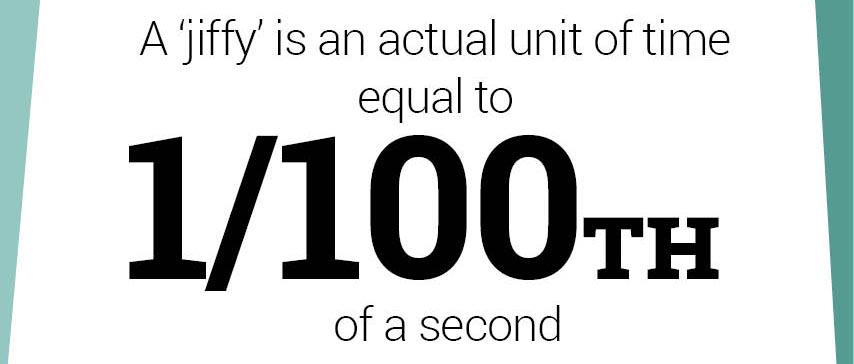
The term “jiffy” has a wide range of meanings across different fields, including computing, physics, and everyday language. In the realm of computing, a jiffy can refer to the amount of time between two pulses of a computer’s system timer. In physics, a jiffy is often used to describe the time it takes for light to travel one centimeter in a vacuum.
Interpretations Across Industries
In the world of electronics and engineering, a jiffy may represent the time taken for one alternating current cycle (1/60th of a second in the case of electricity operating at 60Hz). In chemistry, a jiffy might signify the time it takes for light to travel the diameter of a hydrogen atom.
Everyday Usage and Varied Meanings
Colloquially, a jiffy is commonly understood as a very short period of time, often equating to a few moments or seconds. This loose definition allows for flexibility in language while conveying the idea of a brief interval that is perceived as almost instantaneous.
The Elusive Measurement
Despite its widespread use, the lack of a standardized and universally accepted definition for a jiffy adds to the intrigue surrounding this time unit. Its fluidity and adaptability in different contexts make it a versatile term that can accommodate various interpretations.
Wrapping Up
So, how long is a jiffy really? The answer remains elusive and subjective, with interpretations varying based on different fields and applications. One thing is certain – the concept of a jiffy captures the essence of brevity and immediate significance in our everyday language.











