Do smart meat thermometers like the Meater block actually guarantee a perfect steak?
There’s a familiar scenario in many kitchens: you’ve bought a beautiful cut of steak, fired up the grill or cast iron, and now you’re hovering, poking, prodding, and guessing if it’s truly medium-rare. With the rise of smart cooking gadgets, promises of effortless perfection abound, leaving home cooks to wonder if devices like the Meater block can genuinely eliminate the guesswork and deliver a consistently perfect steak.
How smart meat thermometers work
Smart meat thermometers, such as the popular Meater, take the concept of temperature monitoring to the next level. Unlike traditional leave-in probes or instant-read thermometers, these devices are typically wireless, relying on internal and ambient temperature sensors to communicate with a smartphone app via Bluetooth or Wi-Fi. The magic lies in their predictive algorithms. You input your desired doneness (e.g., medium-rare, 130°F), and the app not only tracks the current internal temperature but also estimates the remaining cooking time. Crucially, they account for “carryover cooking,” the phenomenon where meat continues to cook after being removed from the heat, recommending when to pull the steak from the oven or grill before it reaches the target temperature. This intelligent forecasting aims to nail the final steak doneness accuracy right when it’s ready to slice.
Testing Meater accuracy in real conditions
To truly assess whether a smart meat thermometer can guarantee a perfect steak, we put a Meater block to the test against our trusty instant-read thermometer (a Thermapen MK4) during several cooks. Our setup included reverse-searing a 1.5-inch thick ribeye and grilling a thicker 2-inch New York strip.
For the reverse-seared ribeye, we inserted the Meater probe into the thickest part of the steak and placed it in an oven set to 250°F. The Meater app targeted an internal temperature of 125°F for a final medium-rare after searing. We simultaneously used the instant-read thermometer to verify readings at regular intervals. The Meater consistently read within 1-2 degrees Fahrenheit of our instant-read, showing excellent temperature accuracy. For instance, when the Meater displayed 110°F, the instant-read confirmed 111°F. The app’s predictive timing was also surprisingly accurate, allowing us to plan the sear perfectly.
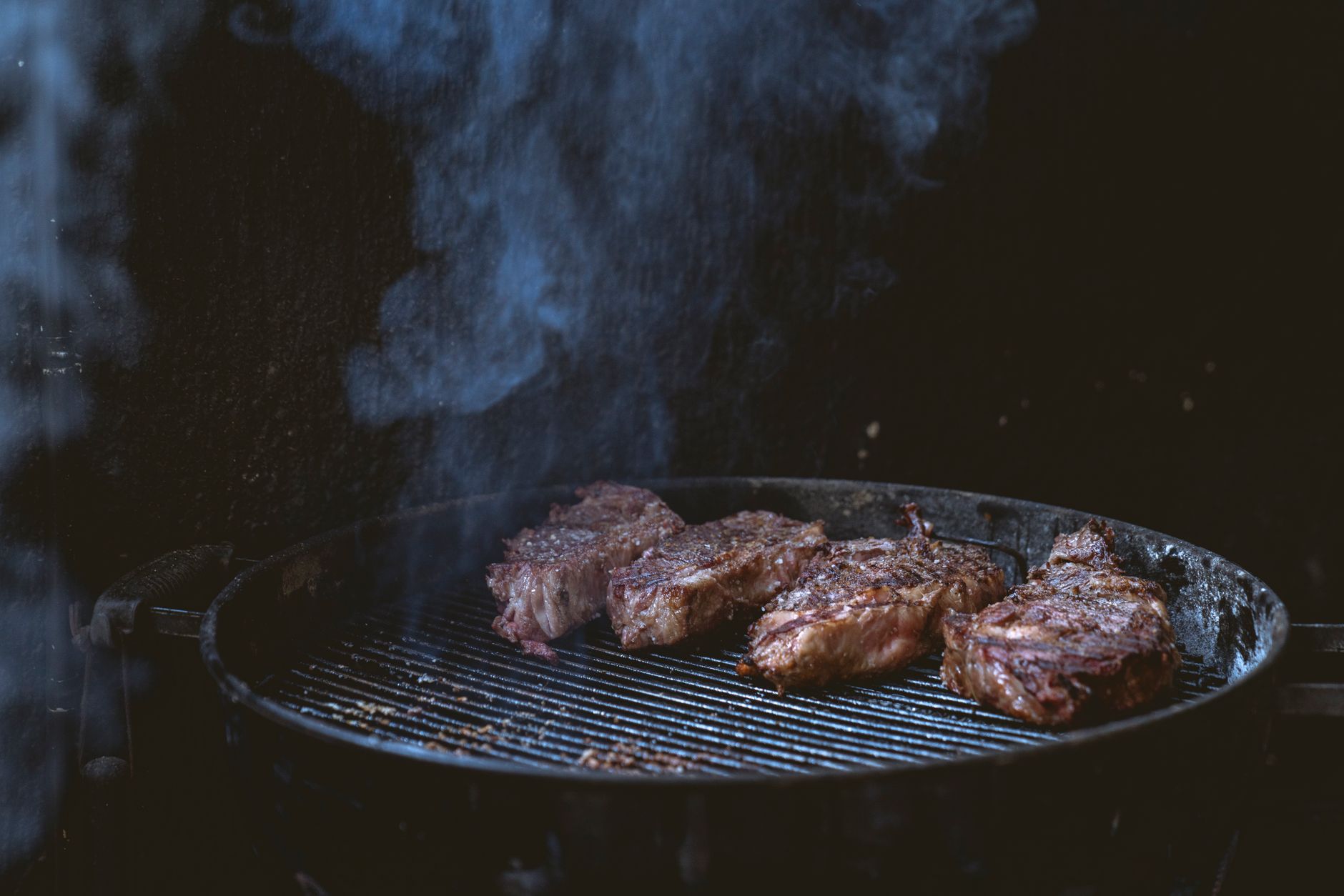
On the grill, testing the 2-inch New York strip, we aimed for a similar 125°F pull temperature. Here, the ambient temperature sensor of the Meater came into its own, providing helpful data about the grill’s internal heat. The Bluetooth reliability was generally good, maintaining a stable connection for about 20 feet through a single glass door from the grill to the kitchen. Beyond that, or through thicker walls, the signal occasionally dropped, requiring us to move closer or rely on the Meater block’s repeater functionality. Once the steak was removed and rested according to the Meater’s recommendation, we found the internal temperature settled precisely at our target of 130°F. This specific Meater thermometer review showed promising results.
Variables that still affect steak quality
While the smart meat thermometer performed admirably in achieving steak doneness accuracy, it’s vital to remember that temperature is just one piece of the puzzle. Numerous other variables significantly influence the overall quality and flavor of your steak:
- Initial Steak Quality: The cut of meat, its marbling, and age play an enormous role. A perfectly cooked choice-grade steak might still not be as flavorful as a prime-grade one.
- Steak Thickness and Cut: Thinner steaks cook faster and can be harder to manage carryover cooking. Different cuts (e.g., tenderloin vs. chuck) require varying approaches regardless of internal temperature.
- Searing Technique: A high-heat sear for a beautiful crust is crucial for flavor and texture. Even with perfect internal temperature, a poor sear can diminish the experience.
- Resting Time: This is non-negotiable. Allowing the meat to rest after cooking, as smart thermometers typically recommend, lets juices redistribute, ensuring a more tender and juicy bite.
- Seasoning: Simple salt and pepper are often enough, but how and when you season (e.g., dry brining) impacts the final taste.
- Cooking Method: Grilling, pan-searing, broiling, or sous vide each impart distinct flavors and textures, even at the same internal temperature.
Ultimately, while a smart meat thermometer can perfectly hit your desired temperature, it won’t magically turn a tough cut into a tender one or compensate for a lack of seasoning or a burnt crust.
Smart thermometer benefits and limitations
Our hands-on testing suggests that smart meat thermometers offer compelling benefits but also come with certain limitations.
Benefits:
- Precision and Consistency: They excel at hitting exact target temperatures, leading to consistent results for steak doneness accuracy every time.
- Hands-Off Monitoring: You don’t have to constantly open the oven or grill lid, losing heat. The app notifies you when critical thresholds are met.
- Predictive Cooking: The estimated remaining cook time and carryover cooking recommendations are incredibly helpful for timing other dishes.
- Peace of Mind: For novice cooks or those tackling expensive cuts, knowing your steak is cooking to perfection reduces anxiety.
Limitations:
- Bluetooth Range: While decent, it’s not always robust enough for larger homes or outdoor cooking far from the receiver, sometimes requiring you to stay closer to your grill or smoker.
- Cost: Smart cooking gadgets like the Meater block represent a significant investment compared to basic instant-read thermometers. A basic Meater+ might start around $100, while the block can be over $250.
- Reliance: There’s a risk of becoming overly reliant on the technology and not developing an intuitive feel for cooking meat.
- Probe Placement: Incorrect probe placement (e.g., too close to bone or fat) can skew readings.
When considering the cost vs benefit analysis, for a home cook who frequently prepares roasts, whole chickens, or thick steaks and values precision and convenience, the investment in a smart meat thermometer like the Meater can be worthwhile. For someone who only cooks steak occasionally or prefers a more intuitive approach, a reliable instant-read thermometer might suffice.
Pro Tips for Your Next Steak:
- Always bring your steak close to room temperature before cooking for more even results.
- Pat your steak thoroughly dry before searing to achieve a better crust.
- Never skip the resting period after cooking – it’s crucial for juiciness!
Frequently Asked Questions
How accurate are Meater thermometers?
In our testing, Meater thermometers demonstrated excellent accuracy, consistently reading within 1-2 degrees Fahrenheit of a professional-grade instant-read thermometer. Their internal and ambient sensors, combined with predictive algorithms, deliver reliable temperature data for precise steak doneness accuracy.
Can smart thermometers replace experience?
While smart meat thermometers significantly enhance precision and provide valuable data, they cannot entirely replace culinary experience. They are powerful tools that aid in achieving perfect doneness, but understanding meat quality, searing techniques, seasoning, and resting remain essential skills that come with practice and experience.
What’s the learning curve for smart meat thermometers?
The learning curve for basic use of smart thermometers like Meater is quite low. The app interfaces are generally intuitive, guiding you through setup and doneness selection. Mastering the nuances of predictive cooking across different cuts and cooking methods, and understanding how to place the probe optimally, takes a few cooks, but the system is designed to be user-friendly.
Are smart thermometers worth the price for home cooks?
For home cooks who prioritize consistent results for larger cuts of meat, roasts, or thick steaks, and appreciate hands-off monitoring and predictive features, smart meat thermometers are generally worth the investment. However, for those who cook steaks infrequently or prefer a simpler, more affordable solution, a high-quality instant-read thermometer offers sufficient utility.
A smart meat thermometer perfect steak is within reach, but it’s more of an incredibly precise assistant than a magic wand. These smart cooking gadgets significantly increase your chances of hitting that ideal internal temperature, making them a valuable tool in your kitchen arsenal for consistently delicious results.











