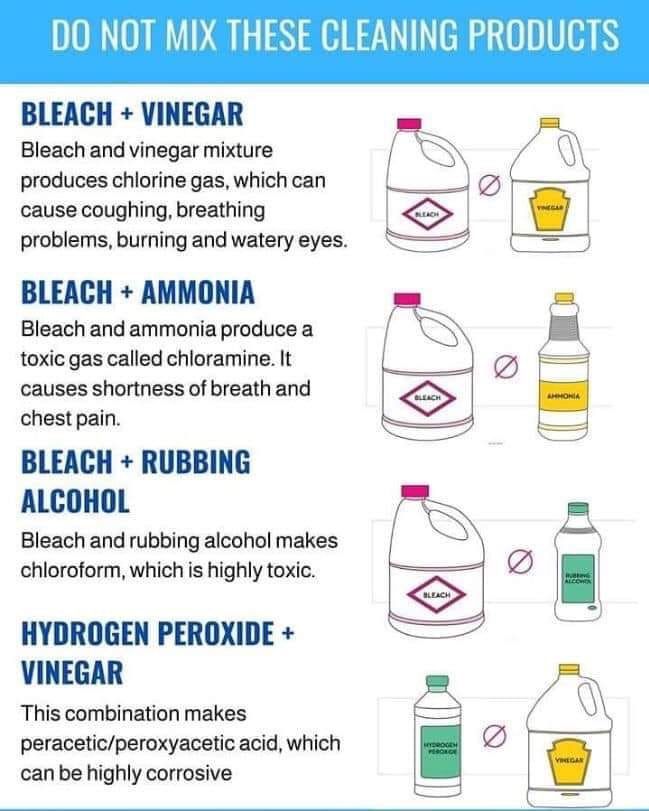
What Not to Mix with Bleach
Bleach is a commonly used household cleaning agent known for its powerful disinfecting properties. However, it is crucial to be aware of what not to mix with bleach as combining it with certain substances can result in hazardous chemical reactions.
1. Ammonia
One of the most important things to remember is to never mix bleach with ammonia. When these two chemicals are combined, they produce toxic chloramine vapors that can cause respiratory issues and even be fatal in high concentrations.
2. Vinegar
While vinegar is a popular natural cleaning solution, it should never be mixed with bleach. Mixing bleach and vinegar creates chlorine gas, a toxic compound that can cause coughing, breathing difficulties, and other serious health problems when inhaled.
3. Rubbing Alcohol
Combining bleach with rubbing alcohol can create chloroform and hydrochloric acid, both of which are hazardous substances. Inhaling the fumes produced by this mixture can lead to dizziness, nausea, and severe respiratory issues.
4. Hydrogen Peroxide
Although hydrogen peroxide is commonly used as a disinfectant, it should not be mixed with bleach. When these two substances are combined, they react to form oxygen gas and water, but the mixture can still be irritating to the skin, eyes, and respiratory system.
5. Acids
Acidic substances such as toilet bowl cleaners, rust removers, and lemon juice should never be mixed with bleach. The reaction between bleach and acids can release chlorine gas, a highly toxic compound that poses significant health risks when inhaled.
Conclusion
It is essential to exercise caution when using bleach for cleaning purposes. Avoid mixing bleach with ammonia, vinegar, rubbing alcohol, hydrogen peroxide, or acidic compounds to prevent the formation of harmful and potentially lethal chemical reactions.
For more information on household cleaning safety tips, visit the homepage.











