Living and cooking in Las Vegas, I’ve watched our local dining scene transform as foodies from all over the world bring their culinary traditions to the desert, creating a beautiful melting pot of Southwestern flavors right in our home kitchens. It was during a late-night backyard grill-off here in Vegas that a friend from Tucson first introduced me to a wrapped-and-loaded masterpiece that completely redefined my concept of backyard barbecues. Since that night, I’ve been on a mission to share this borderlands treasure with anyone who will listen.
Move over, New York dirt water dogs and Chicago-style garden dogs. There is a hidden gem of American street food that is quietly taking over the culinary map, fueled by a rising national obsession with regional food tourism and authentic borderlands flavor. If you’ve ever wondered, what is a sonoran hot dog, you are about to discover a multi-sensory explosion of bacon, beans, and custom-baked buns that will change your grilling game forever.
What is a Sonoran hot dog and where it comes from
To truly understand what is a sonoran hot dog, we have to look south of the Arizona border to the Mexican state of Sonora. The dish originated in the late 1980s in Hermosillo, the capital of Sonora, where street vendors known as dogueros began putting their own regional spin on the classic American hot dog. It didn’t take long for this culinary marvel to cross the border into Arizona, quickly establishing solid roots in Tucson and Phoenix.
Today, this hot dog is more than just a quick street snack; it is a cultural phenomenon. It represents the fluid, beautiful blending of Mexican and American foodways. In a time when food tourism is booming and travelers are willing to drive hundreds of miles for an authentic bite, the Sonoran hot dog has become a culinary pilgrimage site in the American Southwest.
Key ingredients that define it
You cannot simply throw some bacon on a standard ballpark frank and call it a day. A true Sonoran hot dog relies on a very specific architecture of ingredients, each playing a crucial role in the texture and flavor profile.
- The Bun (Bolillo): Unlike a standard split-top hot dog bun, the Sonoran version uses a soft, sweet, pocket-like roll, often called a pan de hot dog or a variation of a Mexican bolillo. It is heavy enough to hold a mountain of toppings without tearing, and it is steamed to pillowy perfection.
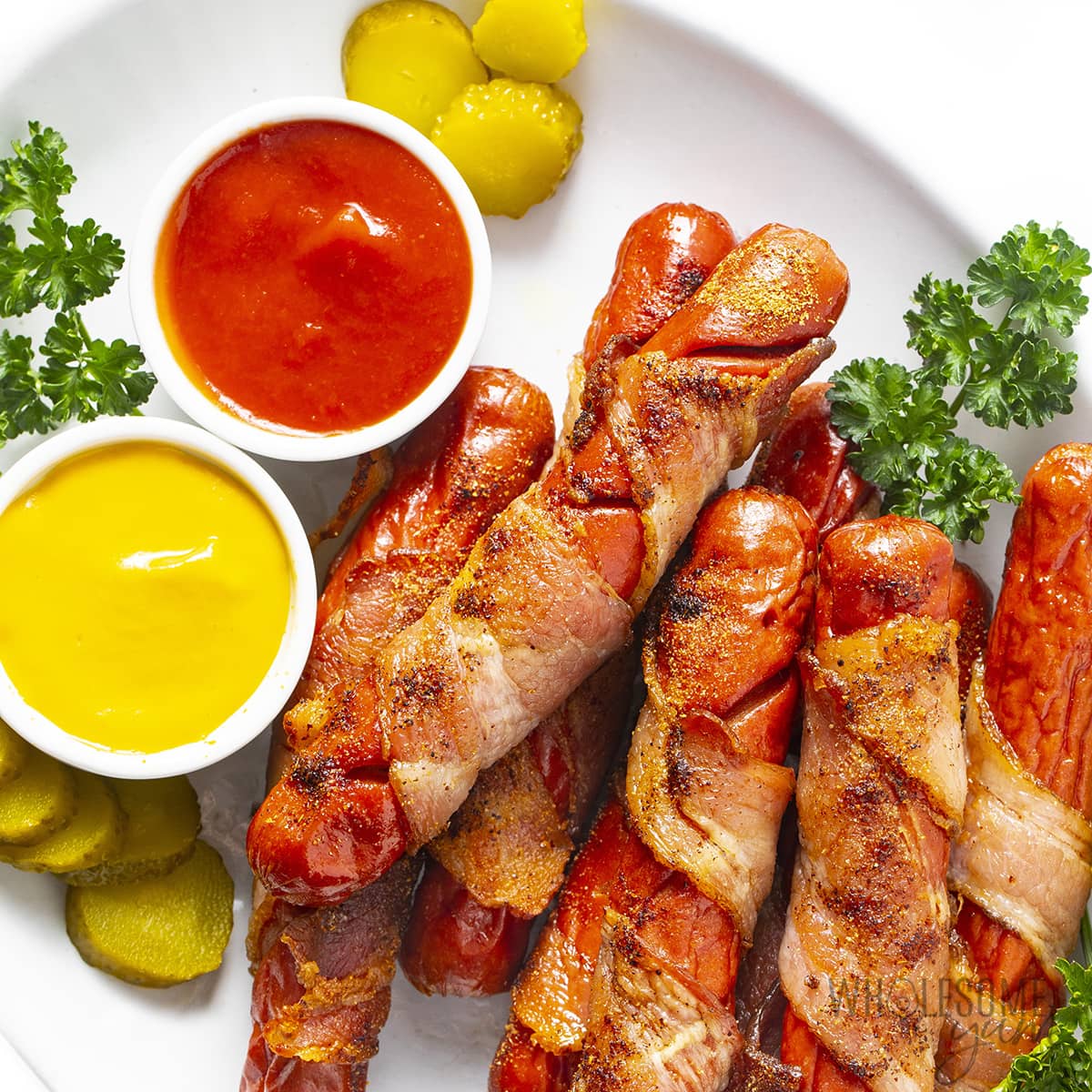
- The Frank: An all-beef hot dog, wrapped tightly from end to end in a single slice of smoky bacon.
- The Beans: Warm, seasoned, whole pinto beans (never refried beans).
- The Fresh Toppings: Finely diced raw white onions, juicy chopped tomatoes, and sometimes grilled green onions.
- The Sauces: A classic yellow mustard, a generous drizzle of Mexican crema or mayonnaise thinned with a splash of milk, and a vibrant jalapeño salsa or hot sauce.
- The Sidecar: A roasted yellow güero pepper, served whole on the side for bites of fiery heat between mouthfuls.
Traditional preparation method
The magic of the dogueros lies in their setup. Traditionally, these hot dogs are prepared on a large, flat-top steel griddle called a plancha. The bacon-wrapped franks are placed directly on the hot surface, allowing the bacon fat to render out slowly and fry the hot dog in its own juices. No oil is needed; the bacon does all the work, turning beautifully crispy while keeping the hot dog underneath incredibly juicy.
While the meat cooks, the buns are placed in a steamer. This is a critical step because a dry bun will crack under the pressure of the wet toppings. Once the bun is hot and soft, a pocket is sliced open along the top, and the assembly line begins. The beans go in first to create a savory bed, followed by the crispy bacon-wrapped dog, then the vegetables, and finally, the artful zig-zags of sauces.
How to make it at home
You don’t need a commercial street cart to bring this Southwestern staple into your kitchen. Here is how you can recreate this culinary masterpiece at home using standard kitchen tools.
Ingredients:
- 4 all-beef hot dogs
- 4 slices of thin-cut bacon (thick-cut bacon will not wrap tightly or crisp up properly)
- 4 bolillo rolls or high-quality, soft hoagie buns
- 1 cup of cooked, warm pinto beans (seasoned with garlic and salt)
- 1/2 cup of finely diced white onions
- 1/2 cup of finely diced Roma tomatoes
- 2 tablespoons of yellow mustard
- 1/4 cup of mayonnaise (whisked with 1 teaspoon of fresh lime juice)
- 1/4 cup of green jalapeño salsa
- 4 whole güero (yellow) peppers or jalapeños for grilling
Instructions:
- Wrap the hot dogs: Take one slice of bacon and wrap it spirally around a hot dog, securing the ends. You shouldn’t need toothpicks if you wrap it snugly; the bacon will shrink and cling to the meat as it cooks. Repeat for all four dogs.
- Cook the franks and peppers: Heat a large cast-iron skillet or griddle over medium heat (about 375°F). Place the wrapped hot dogs and the whole yellow peppers directly onto the dry skillet. Cook, turning occasionally, for about 10 to 12 minutes. The bacon should be golden brown and crispy on all sides, and the peppers should be beautifully blistered.
- Steam the buns: While the meat is cooking, set up a steamer basket over boiling water. Place your buns inside for about 1 to 2 minutes just until they are soft, warm, and highly pliable.
- Assemble the hot dog: Slice a pocket into the top of each steamed bun, making sure not to cut all the way through. Spoon 2 to 3 tablespoons of warm pinto beans into the bottom of the bun. Lay the crispy, bacon-wrapped hot dog directly on top of the beans.
- Add the toppings: Layer on the diced onions and tomatoes. Drizzle the lime-infused mayonnaise, yellow mustard, and jalapeño salsa over the top in a zig-zag pattern.
- Serve: Serve immediately with a hot, blistered yellow pepper on the side.
Pro Tips for Success:
- Use thin bacon: Thick-cut bacon takes too long to render, which means your hot dog will overcook and shrivel before the bacon gets crispy.
- Steam, don’t toast: Resist the urge to toast the buns. The soft, pillowy texture of the steamed bun is what absorbs the savory juices of the beans and bacon.
- Master the drizzle: Put your mayonnaise and salsa into plastic squeeze bottles so you can achieve those signature, picture-perfect stripes across the top of your dog.
Toppings and regional variations
If you are trying to explain what is a sonoran hot dog to a friend who has never had one, you can describe it as a culinary canvas. While the classic Tucson style features the simple holy trinity of mustard, mayo, and jalapeño salsa, other regions like Hermosillo take things to even more decadent heights.
Some vendors offer a self-serve bar of toppings where you can load your bun with crushed potato chips for added crunch, cotija cheese for a salty kick, sliced avocados, or even a spoonful of sweet relish. In some Phoenix neighborhoods, you might even find variations that feature a split, grilled weener stuffed with cheese before being wrapped in bacon. The beauty of this dish is its adaptability; it welcomes creativity while keeping its comforting, smoky core intact.
Frequently Asked Questions
Where did the Sonoran hot dog originate?
The Sonoran hot dog originated in Hermosillo, the capital of the Mexican state of Sonora, in the late 1980s. It quickly migrated north into Southern Arizona, where it became a legendary local staple in cities like Tucson and Phoenix.
What makes it different from a regular hot dog?
If you are still wondering what is a sonoran hot dog‘s main differentiator, it comes down to three things: the bacon-wrapped frank, the inclusion of warm pinto beans, and the soft, sweet, boat-like bolillo roll that is steamed rather than toasted.
Can I make this on a regular grill?
Yes, but you have to be careful with the bacon grease dripping into the open flames, which can cause flare-ups and burn the bacon. For the best results on an outdoor grill, place a cast-iron griddle plate or a heavy skillet directly onto the grill grates to cook the bacon-wrapped dogs.
Conclusion: Why you need to try this
Now that you know what is a sonoran hot dog and how to craft one in your own kitchen, there is only one thing left to do: fire up the stove and experience it for yourself. It is a brilliant representation of the Southwest’s rich, cross-border culinary heritage—a dish that is simultaneously humble, complex, messy, and incredibly satisfying. Gather your friends, prep your toppings, and dive into one of the greatest street food traditions the American continent has to offer. Happy eating!